

How to Properly Choose a Range Hood
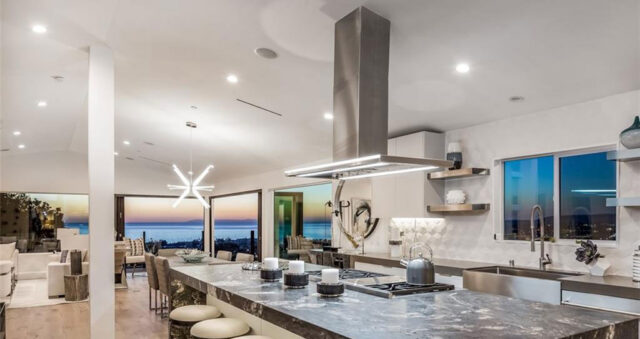
Choosing the right range hood for your kitchen can be a confusing and difficult process- what style and type of range hood do you need to best complement your kitchen’s layout? How wide does your new range hood need to be? Do you need to have a duct in your kitchen to achieve the best performance? Fortunately, Futuro Futuro has a comprehensive guide that empowers you to make an informed decision about your kitchen range hood purchase.
Types of Range Hoods


There are generally three types of range hoods. Wall range hoods are what they sound like: exhaust hoods that are designed to install on to the wall over cooktops that are situated against a wall. Cooktops installed in an island at the center of your kitchen will require an island range hood or a recessed ceiling range hood. Island mount range hoods are installed to hang like pendulums from the ceiling directly over your central island cooktop. While recessed ceiling mount range hoods are installed flush with the ceiling, giving a kitchen more clean look, however, loosing in performance due to a huge distance to the cooking surface. Finally, built-in range hoods or insert-cabinet range hoods are designed to fit inside existing cabinetry or within custom designed range hood covers to essentially hide the appliance and create a more seamless kitchen design.
Height and Width Requirements
When attempting to determine what size range hood you need, first consider the type and size of your existing stove or cooktop. Generally, optimal performance is achieved when your range hood is the same size or wider than your stove. The height, or distance between your stove and your range hood, is also extremely important. To get the best performance out of your range hood, the bottom of the hood should be 28 inches above your stove. Placed any higher, and your range hood will have to work harder to fight against drafts in your kitchen caused by open windows, doors, and your air conditioner, making the capture of smoke, steam, odors, and grease more difficult and resulting in a sub-optimal performance. If you must place your range hood higher than 28 inches above your stove, it is recommended to purchase a larger range hood. Specifically, the rule of thumb is to add width to your range hood at a two to one ratio: add two inches to the width of your range hood for every additional inch above 28 inches. For example, if your stove is 36 inches wide and you are considering a 36 inch range hood, but need to place your range hood 29 inches above your stove, you should purchase a range hood that is 38 inches or wider.
Ducted vs Ductless Range Hoods


While ducted range hoods are always recommended, ductless range hoods are a good option for those who cannot install a duct in their kitchen. A ducted range hood works by extracting smoke and odors from the air in the kitchen and pushing it outside of the house, making suction of odors and smoke fast and efficient. Be sure that your duct is rigid, not flexible, as rigid ducts provide a quieter performance and generally don’t require any maintenance over time, since they aren’t damaged by any bending that a more flexible duct would experience. Futuro Futuro also recommends installing an end cap at the end of your duct on the outside of your home. An end cap acts like a damper or flapper, opening when the ventilation hood is turned on and closing when the range hood is not in use. The end cap also protects the blower and the duct system from weather and unwanted inhabitants, such as insects and rodents.
If installing a ducted range hood is not possible, the next best solution is Futuro Futuro’s Air Loop recirculating range hood, which provides state-of-the-art air filtration technology without requiring a duct. The Air Loop uses a Micro Carbon Infusion Filter, which absorbs smoke, steam, and odors instead of removing them to the outside of your home. This carbon filter boasts a long lifespan and replicates the efficiency and all of the advantages of a ducted range hood without requiring kitchen owners to undertake the laborious and expensive process of installing a duct in your home.
Ceiling Type
Kitchen owners seeking to install an island range hood above their island cooktop should consider the type and shape of their ceiling. Kitchens featuring unusually high, sloped, vaulted, or cathedral ceilings will not be able to install an ordinary suspended range hood over their island due to the mounting hardware suspending the island range hoodfrom the ceiling. In order to account for any unusual ceiling shape or height, kitchen owners have three options to choose from. First, you can install a soffit box, which effectively lowers the ceiling height and levels the ceiling with the floor, making installation easier and allowing the ceiling range hood to be placed at the proper height over the cooktop. A soffit box typically extends the length of the ceiling and is painted to match the existing ceiling. Your second option is to install a recessed ceiling mount range hood. With this option, the recessed range hood is installed within the ceiling, making the bottom of the range hood discreetly flush with the ceiling. While this option gives a streamlined appearance, it requires you to install your range hood well over 28 inches away from your cooktop and will likely result in a less than ideal performance. The third option is to install an Air Loop range hood, mentioned above, as long as there is no existing ductwork.
Kitchens with unusually low ceilings are much easier to work with. Please reach out to Futuro Futuro’s technical experts, who can assist you in ensuring that the ventilation hood that you would like to purchase can be cut shorter than the standard height.
Materials and Finish


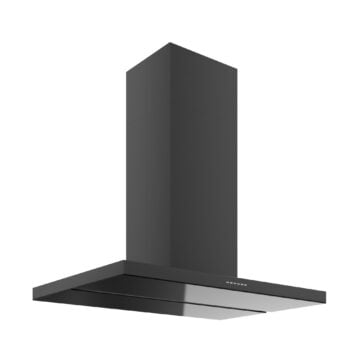


All of Futuro Futuro’s range hoods are made in Italy, composed from the highest grade AISI 304 stainless steel. This is the highest quality stainless steel on the market, and is durable and resistant to rust or damage. Working with a stainless steel range hood of this quality is especially beneficial if you have a gas range, as gas ranges tend to emit more heat which could potentially damage parts within range hoods that are made from lesser materials. On the other hand, painted range hoods can compliment some particular kitchen designs, but they are not that practical from cleaning/maintenance point of view.
Kitchen Design
After you’ve determined the type, size, and ventilation method that you’ll need for your new Italian range hood, you can then choose which style you’d prefer. Lovers of unique and modern styles may prefer the beautiful glass bodies of the Murano series of contemporary range hoods, while those who have a penchant for minimalist styles may gravitate toward the simplicity of the Streamline and Viale series. Conversely, kitchen owners looking to create a picturesquely cozy atmosphere will love the traditional style range hoods named for New England cities, which inspired their rustic design. Whatever your style, you’ll be sure to find something you love in Futuro Futuro’s immense and diverse collection.
Questions? Call 800-230-3565 (USA toll-free) or 718-236-1570 (outside the USA).


Leave a Reply