
Ductless Recessed Range Hoods - Flush Ceiling Italian Design | Futuro Futuro
Choose a ductless recessed range hood installed flush with the ceiling that filters cooking air and returns it to the room when outdoor ducts are not possible. These recirculating recessed range hood and ductless flush ceiling hood designs clear grease and odors without a hanging canopy, with whisper-quiet 940 CFM class power. Compare Italian AISI 304 stainless finishes. Explore the collection.

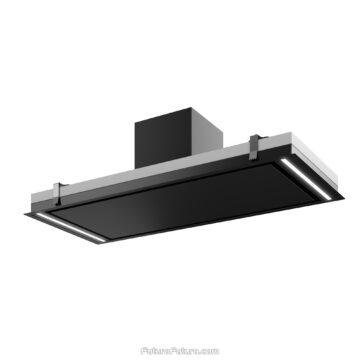
About this collection
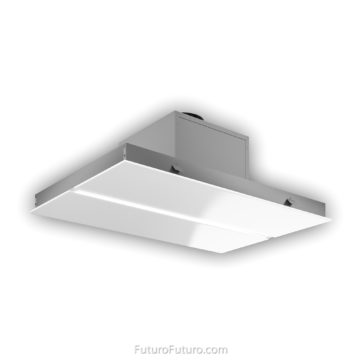
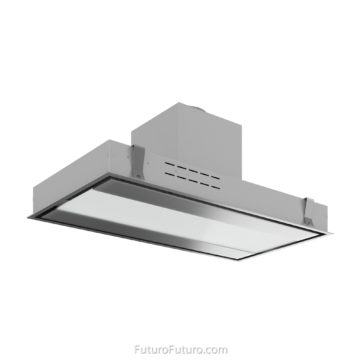
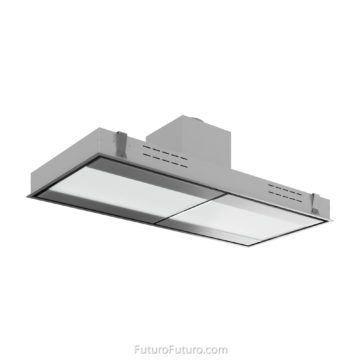
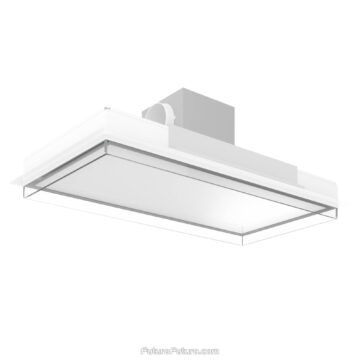
A ductless recessed range hood installs flush with the ceiling and recirculates filtered air back into the kitchen instead of venting it outdoors through ducts. For luxury open kitchens in the United States and Canada where exterior ducting is blocked by structure, condo rules, or a finished remodel, that recirculating recessed range hood still captures grease and odors without a hanging canopy. Futuro Futuro ductless flush ceiling hood designs pair Italian architectural restraint with whisper-quiet 940 CFM class power.
Flush ceiling design that keeps the room open
Recessed range hoods sit even with the ceiling or inside a soffit enclosure so the canopy reads as part of the ceiling plane rather than a freestanding chimney. AISI 304 stainless steel, tempered glass, and refined painted surfaces give these ductless recessed range hood pieces investment-grade material quality while lighting, stone, and cabinetry remain the visual focus. Glass and stainless frames stay flush so islands keep clear views from living areas to the cooktop.
Recirculating filtration without outdoor ducts
Ductless installation draws steam, smoke, and grease at the flush canopy, then passes air through metal grease filters and activated carbon filters before releasing cleaned air back into the room. No exterior duct is required through the roof or sidewall. Condos and tight renovations gain usable extraction without opening a finished ceiling chase for outdoor venting.
Most Futuro Futuro recessed ceiling models can run ducted or ductless. Carbon filters convert the same designer canopy into a recirculating recessed range hood when outdoor ducting is off the table. A Recessed Ceiling Recirculation System accessory supports recirculating conversion on compatible ceiling installs. Plan return-air openings in the ceiling or soffit so filtered air can exit cleanly.
Quiet power for open-plan ceiling cooking
Blowers deliver variable airflow from about 150 to 940 CFM. Open cooktops lack a back wall to channel rising plumes, and a ductless flush ceiling hood often sits higher than a hanging canopy, so staged high CFM class power still matters. In ductless mode, expect lower delivered performance than a clear outdoor duct path, often around a thirty percent reduction class, because filtered air returns with heat and humidity. Sound-absorbing blower design keeps rated noise in the 0.5 to 3.2 sone range, so extraction stays conversation-friendly. Perimeter suction on selected models broadens coverage. LED lighting and multi-speed controls keep daily use simple.
Sizes and fit for ceiling and soffit installs
Futuro Futuro recessed ceiling and soffit range hoods typically span about 36 to 54 inches for popular islands and wider cook zones. Match the canopy to cooktop width so the ductless recessed range hood gathers lateral steam before it drifts into dining areas.
- Mid-width ductless recessed range hoods for common 36 inch cooktops and islands
- Wider recirculating recessed range hood formats near 48 to 54 inches
- Stainless, glass, and specialty finishes that read as architectural lighting
- Soffit or custom enclosure installs when joists require a frame
Plan ceiling cavity depth, joist direction, and return-air exit early. Confirm cutout, housing height, and recirculation kit details on each product page. Standard power is a US and Canada 110 to 120 V plug-in on a dedicated circuit.
Carbon filters, care, and ownership
Standard recirculating setups rely on charcoal or carbon filters that absorb odors. Replace those filters every few months based on cooking volume. Grease filters, often dishwasher-safe metal mesh, still need regular cleaning so airflow stays open. Soft cloths and mild detergent along the steel grain keep exteriors refined. Northern Italy production supports consistent premium fit and finish. Models ship from the Hallandale, Florida warehouse with sizing support for flush ceiling installs.
When ductless recessed is the right luxury choice
Choose a ductless recessed range hood when you want the ceiling plane to stay flush and exterior ducting is impossible or would damage a finished remodel. Recirculating paths filter grease and odors but return heat and moisture to the kitchen, so they suit lighter to moderate cooking loads. When a solid outdoor duct path through the ceiling is available, a ducted recessed path removes moisture more completely. Many ceiling models let you decide at install time.
Who ductless recessed range hoods serve
Primary buyers are renovating homeowners who want open sightlines without outdoor duct access, designers specifying flush ventilation above islands for condos and duct-restricted plans, and serious cooks who still want quiet staged extraction when a roof vent is off the table. Builders value clear soffit rules, plug-in power, and US support.
Browse ductless recessed range hoods by size and finish, then compare recirculating recessed range hood and ductless flush ceiling hood designs. Explore the collection.
Questions about Ductless Recessed Ceiling Range Hoods
What is a ductless recessed range hood?
A ductless recessed range hood installs flush with the ceiling or inside a soffit and recirculates filtered air back into the kitchen instead of venting it outside through ducts. Grease filters plus carbon filters clean cooking air before it returns to the room.
How does a recirculating recessed range hood work?
The blower pulls steam, smoke, and grease at the flush canopy. Metal grease filters capture oil particles, then activated carbon filters absorb odors. Filtered air exits back into the room through return openings in the ceiling or soffit, so no exterior duct termination is required.
When should I choose a ductless flush ceiling hood?
Choose a ductless flush ceiling hood when you want the ceiling plane to stay open and exterior ducting is blocked by structure, condo rules, or a finished remodel. Recirculating setups prioritize install flexibility. When a solid outdoor duct path through the ceiling is available, ducted recessed venting removes heat and moisture more completely.
What sizes of ductless recessed range hoods are available?
Futuro Futuro recessed ceiling and soffit range hoods typically span about 36 to 54 inches. Exact cutout width, housing depth, and recirculation details vary by model, so open each product page for final dimensions.
Do Futuro Futuro ductless recessed range hoods need carbon filters?
Yes. In ductless mode, carbon or charcoal filters are required for odor control. Convertible recessed models accept carbon filters for recirculating use. A Recessed Ceiling Recirculation System accessory is available for compatible ceiling installs; confirm kit and filter details with product or accessory pages.
How often should carbon filters be replaced on a recirculating recessed range hood?
Standard carbon filters typically need replacement every few months, often in a three to six month band depending on cooking volume. Heavier frying and high-heat cooking saturate carbon faster. Rechargeable filter options for the Recessed Ceiling Recirculation System follow the intervals listed on the accessory page.
How quiet are Futuro Futuro ductless flush ceiling hoods?
Rated noise across the line typically falls between 0.5 and 3.2 sones depending on speed. Sound-absorbing blower design, filter engineering, and smooth air paths keep extraction usable during cooking and conversation even when air recirculates into the room.
What CFM airflow do these ductless recessed range hoods provide?
Models are specified in the 150 to 940 CFM class with multiple speeds. In ductless mode, delivered performance is typically lower than a clear outdoor duct path, often around a thirty percent reduction class, because filtered air returns to the kitchen with heat and humidity.
Can a ductless recessed range hood install in a soffit?
Yes. Many Futuro Futuro recessed ceiling models can flush-mount into the ceiling or install inside a soffit or custom enclosure. Confirm housing height, retaining frame details, and return-air openings on the product page so the finish plane stays even while air recirculates.
How does a ductless flush ceiling hood differ from a hanging island hood?
A ductless flush ceiling hood sits even with the ceiling so sightlines stay open over islands and open plans. A hanging island hood suspends below the ceiling on a chimney or cables. Both can recirculate with carbon filtration; the mount plane and visual presence are the main differences.
What finishes and materials do these recirculating recessed range hoods use?
Bodies commonly use AISI 304 stainless steel with tempered glass and painted or specialty surfaces depending on the model. Finishes range from brushed stainless and matte black or white to glass panels and other designer treatments. Each product page lists exact materials.
Who are ductless recessed range hoods designed for?
This collection targets homeowners renovating high-end open kitchens who want flush ceiling ventilation without outdoor duct access, designers specifying recirculating recessed range hood proportions for condos and duct-restricted plans, serious home cooks who still want quiet staged extraction, and trade partners who need stocked models with US support from the Hallandale, Florida warehouse.